



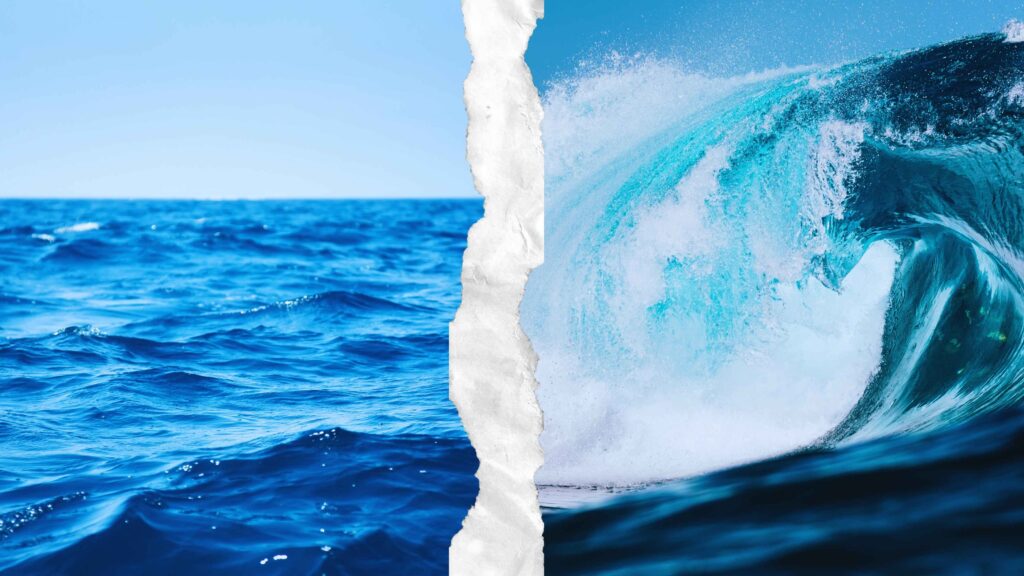
🌊 What is the Water Cycle?
The water cycle is how water travels around the planet. It constantly occurs and never ends. Water rises into the air, clouds form, rain falls, and then returns to the sea. This continues to happen over and over.
Oceans play a very significant role in this cycle. Oceans supply water to the sky by a process known as evaporation. Oceans also get water back when it rains. Oceans contribute to making clouds, bring about rain, and distribute heat globally. Without oceans, there would be no proper water cycle.
Evaporation – Oceans Send Water to the Sky
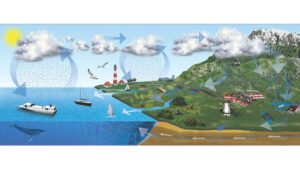
The initial process of the water cycle is referred to as evaporation. This occurs when the Sun warms water on Earth and converts it into water vapor. Water vapor is similar to steam that rises up into the air.
Oceans cover a large part of the Earth’s surface. That is why they supply most of the water that enters the air. When the Sun heats the ocean, it heats the water. The hot water evaporates and rises into the air. This vapor will shortly turn into clouds.
Even a small amount of heat can evaporate a huge quantity of water. The oceans have a very big role to play here. Actually, most of the water vapor in the atmosphere originates from the sea.
Condensation – Creating Clouds from Vapor
Once water evaporates, the water vapor rises further in the sky where air is colder. When vapor is cooled, it transforms into minute water droplets. The drops clump together and develop clouds. Condensation is this process.
Clouds are composed of ocean water that evaporates. The wind carries the clouds over land. When the clouds are full of water, the next process in the water cycle starts — precipitation.
️Precipitation – Rain Comes from the Clouds
When the raindrops in the clouds become too heavy, they drop down to the earth. It is known as precipitation. It occurs as rain, snow, hail, or sleet.
Most of the rain goes into the ocean, but much of it lands on land. The water fills the rivers, lakes, and ponds. The water provides us with drinking water and nourishes plants.
Precipitation is an important process that brings water back to the earth. Without oceans to create clouds, we would not have sufficient rain.
Oceans as Water Collectors
When it rains, the water seeps into the ground. Some of the water flows into the streams and rivers. The rivers usually make their way back to the oceans.
Oceans gather all this water and store it. Actually, oceans hold approximately 97% of all the water on our planet. That is a tremendous quantity! This water is salty, so we cannot drink it. But it serves the world by powering the water cycle.
When water returns to the ocean, the Sun begins to warm it once again. The cycle repeats itself all over again — evaporation, condensation, and precipitation.
Ocean Currents Spread Water and Heat
Oceans are not static water. They contain currents — like rivers in the ocean. These currents transport warm water from one location to another. They spread heat and moisture around the planet.
This movement influences weather. For instance, warm ocean currents can cause surrounding areas to become warmer and more humid. Cold currents can cause areas to be cooler. This regulates the level of rain and where it occurs.
Ocean currents also:
🚢 Transport water to various regions of the world
🌪️ Contribute to storms and weather formations
🌊 Enable sea life by transporting food and oxygen
Ocean currents are nature’s conveyor belts. They maintain the balance of the Earth’s water and weather.
Why is the Water Cycle Important?
The water cycle provides us with fresh water. We require water to drink, cook food, bathe, and cultivate food. Water is also required by plants and animals to survive. The water cycle fills rivers, ponds, and lakes that sustain life.
Due to the oceans, the water continues to move and get recycled. Without a water cycle, most areas would run dry and become barren.
Oceans ensure that all corners of the world receive some rainfall. Even deserts receive their small amount of water due to the assistance provided by the ocean in the formation of clouds.
Water Cycle Study in Schools
Learning about the water cycle is very crucial for children. At Anee’s School, the best school in Mohali and best school in Kharar, provide a fun and easy way to learn science.
Students can learn the water cycle with:
💧 Hands-on experiments with cooling and boiling water
💧 Observing water evaporating from puddles or glass containers
💧 Drawing diagrams of how water travels in nature
💧 Group discussions about how oceans contribute to rainfalls
These engaging learning strategies aid students to recall better and think like little scientists.
A Day in the Life of a Water Drop
Let’s suppose a water drop by the name of “Bubbles.” Bubbles is resting in the ocean while under the scorching sunlight. The Sun warms him, and he evaporates into vapor and rises into the sky. Bubbles is part of other drops to become a cloud.
After a while, Bubbles drops from the sky as rain into a river. The river takes him back to the ocean. The following day, the Sun comes out again, and Bubbles starts his journey again.
This tale illustrates how each drop of water is on a grand adventure — the water cycle — and how oceans are where it all begins.
Important Words to Remember
💧 Water cycle – the journey of water through nature
♨️ Evaporation – water turns to vapor
☁️ Condensation – vapor forms clouds
🌧️ Precipitation – rain, snow, or hail
🌊 Oceans – the biggest source of water
💦 Currents – moving water in the sea
🏫 Best schools in Mohali – where science is fun
📚 Best schools in Kharar – for smart learning
Read more important blogs from Anee’s School:
Marine Life: Sea Creatures and Their Vital Ecosystem Roles