



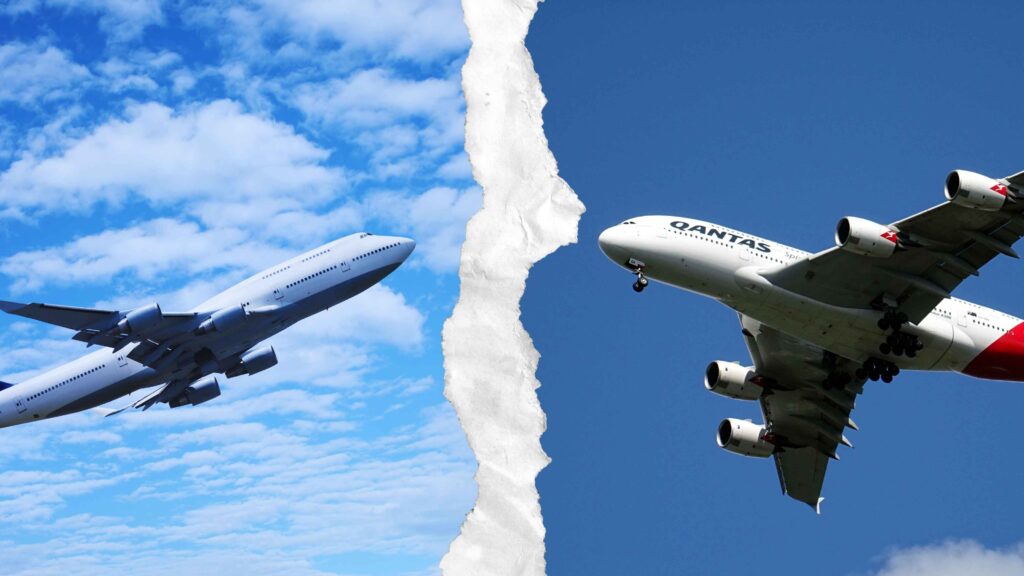
✈️ How Airplanes Fly? The Physics of Lift and Thrust
Have you ever seen an airplane up in the sky and just thought, “How does that big thing fly?” Airplanes are heavy, big, and made of metal – and they fly as if they were birds!
Let us take a look at the simple science of how airplanes fly. This topic is fun, easy, and can be enjoyable for all students’ general knowledge! especially at Anee’s School, where we make learning fun for everyone!
🌬️ What Makes an Airplane Fly?
Airplanes fly because of two main forces:
⬤ Lift
〇 Thrust
These forces work together with two other forces:
⬤ Gravity
〇 Drag
Let’s understand all these in very easy words.
🛫 The Four Forces of Flight (Explained Simply)

✨ 1. Lift – The Upward Push
Lift is the force that pushes the airplane up. The wings help create lift. The shape of the wings makes the air move faster above the wing and slower below. This difference in air pressure pushes the plane up into the sky.
🚀 2. Thrust – The Forward Push
Thrust is the force that moves the airplane forward. This is created by the engines or propellers. Just like a bird flaps its wings to move forward, the plane uses engines.
⬇️ 3. Gravity – The Downward Pull
Gravity pulls everything down to Earth. Planes need enough lift to go up and fight gravity.
🌫️ 4. Drag – The Air That Slows Down
Drag is the air that pushes back against the airplane. The plane must have strong thrust to go against drag and move forward.
🛩️ Wings at Work
Wings are shaped in a particular way. The top is curved and the bottom is flat. This shape is called an airfoil.
Here’s how it works:
🔴 As the plane moves, air flows over and under the wings.
🔵 The air on top is faster and has lower pressure.
🔴 The air under the wings is slower and has higher pressure.
🔵 This pressure difference lifts the plane into the air!
This is Bernoulli’s Principle – a simple rule of science that tells us why lift occurs.
⚙️ What Are Airplane Engines For?
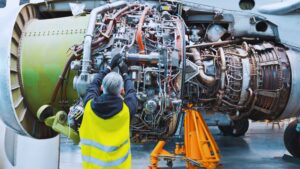
Engines are extremely powerful. They push the airplane forward with great zeal. The forward push is called thrust.
When the airplane gets going fast enough, the wings create enough lift to go up. This is how an airplane takes off.
There are two types of engines.
★ Jet engines (used in large airplanes)
☆ Propellers (used in smaller airplanes)
🛬 How Do Airplanes Land?
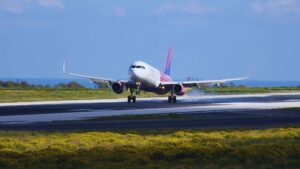
After a flight has ended, a plane must come down. For a safe landing:
▼ The pilot will throttle back the engines to decrease thrust.
▽ Reducing thrust decreases lift so gravity will bring the plane down.
▼ The pilot slows the forward motion and stops on the ground with wheels and brakes.
Landing the plane requires skill and planning!
📚 Why Should This Be Taught to Students?
At Anee’s School, we believe that real-life subject areas challenge children to develop smart thinking. Studying how airplanes fly teaches children:
⦿ Science concepts of air pressure, forces and motion
⦾ How machines work in the real world
⦿ Curiosity about travel, technology and nature
This is how every student of knowledge becomes smarter and more confident.
📝 Conclusion
Airplanes are in flight because of lift and thrust. Wings create lift, engines create thrust. The right amounts of all four forces must be balanced for planes to take off, fly, and land safely.
Science is all around us, even in the skies. At Anee’s School we teach this science simply and joyfully, and learning about how airplanes fly is fun and helps children learn about how the world works.
🌟 Want your child to fly high in knowledge too?
Choose Anee’s School—one of the best schools in Kharar and Mohali for bright minds and bright futures.
👉 Visit our website: www.aneesschool.com
Read more important blogs from Anee’s School:
Marine Life: Sea Creatures and Their Vital Ecosystem Roles